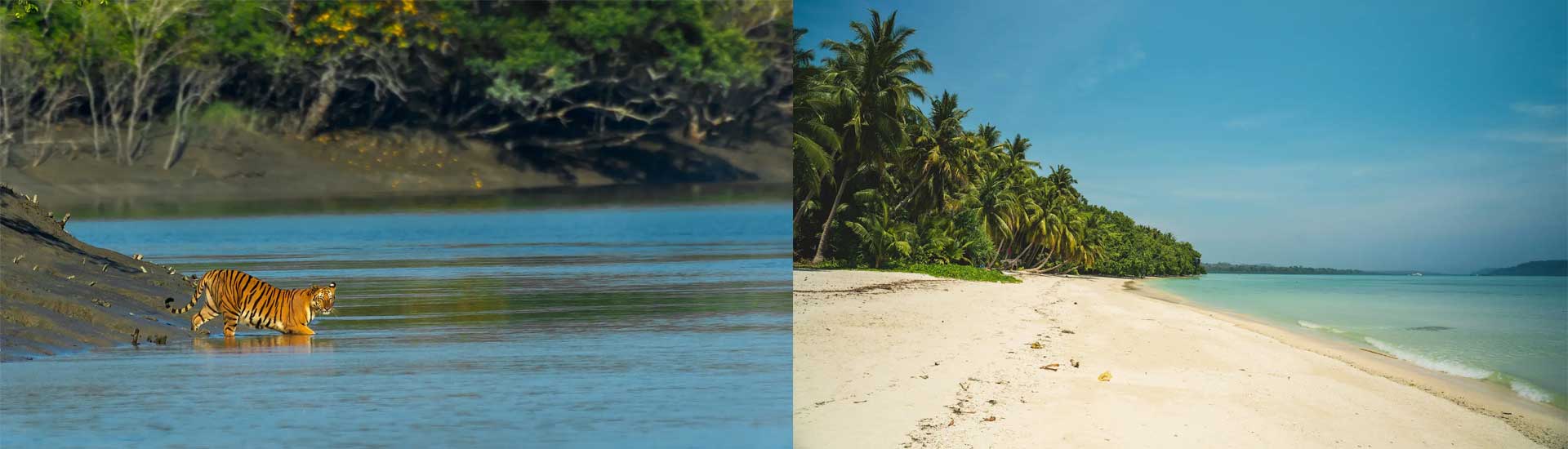

Sundarbans vs Andaman Islands
Comparing Sundarbans vs Andaman Islands depends on the kind of experience you're looking for. Here's a breakdown across different aspects to help you decide:
A Sundarban tour is a unique travel experience offering rich wildlife, mangrove forests, and the thrill of exploring the world’s largest delta.
Sundarbans: The Mangrove Jungle Adventure
Location: West Bengal, India (and parts in Bangladesh)
Type: UNESCO World Heritage Site, world's largest mangrove forest
Highlights:
• Wildlife Safari: Home to the elusive Royal Bengal Tiger, saltwater crocodiles, spotted deer, and rich birdlife.
• Mangrove Ecosystem: Unique tidal forests, crisscrossed with rivers and creeks.
• Cultural Experience: Traditional fishing villages, local folklore about tiger gods (Bonbibi).
• River Cruises: Most of the exploration is by boat — adds to the wilderness feel.
Pros:
•Great for nature lovers, wildlife enthusiasts, photographers.
•Offers a raw, offbeat, slow-travel experience.
•Less commercialized than most tourist spots.
Cons:
•No beaches, limited adventure activities.
•Remote — basic accommodations, weather-dependent travel.
•Limited sightings of tigers — it’s more about the atmosphere than guaranteed wildlife.
Andaman Islands: Tropical Island Getaway
Location: Bay of Bengal, 1000+ km from mainland India
Type: Indian archipelago with stunning beaches and coral reefs
Highlights:
• Beaches: Radhanagar (Havelock) is one of Asia’s best. White sand, turquoise water.
• Scuba Diving & Snorkeling: Rich coral reefs, marine life (Nemo fish, sea turtles, rays).
• Island Hopping: Havelock, Neil, Ross Island, and more.
• History: Cellular Jail in Port Blair, British colonial past.
Pros:
• Perfect for honeymooners, families, or adventure seekers.
• Water sports galore – kayaking, diving, snorkeling, jet skiing.
• More developed tourist infrastructure — resorts, restaurants, etc.
Cons:
• Can get crowded in peak season (Dec–Feb).
• Some islands may have restricted access or permits required.
• More expensive than mainland travel.